
🎓 This is what I studied:
- Bachelor’s degree in Informationsdesign; IND05
- Master’s degree in Ausstellungsdesign; AUD09
⭐ My job: Designer with a design agency “raminger & hirzberger” in St. Ruprecht/Raab, Austria

Ready, study, go!
Start your studies top informed.

Study your dream!
All information about studying.

Stay in touch!
Stay connected with the university.

Study with Purpose!
Discover our study programmes.

Advance with Purpose!
Lifelong learning and thinking ahead.

Research with Purpose!
Research from idea to application.

Better together!
As a university we create new opportunities.
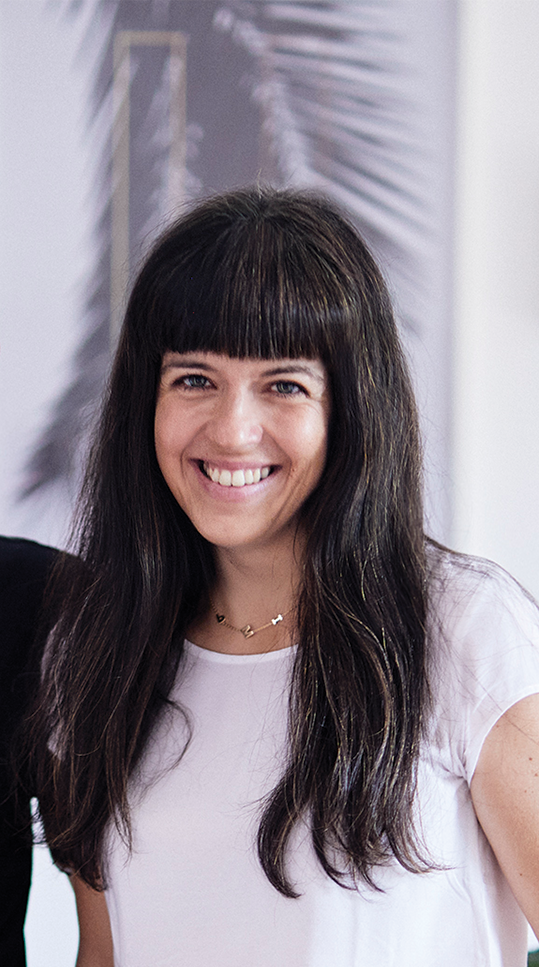
Martina Raminger is a designer and co-founder of the design studio Raminger & Hirzberger, which she runs together with her partner. Her work focuses on sustainable brand identities for companies as well as authentic, high-quality photography.
🎓 This is what I studied:
⭐ My job: Designer with a design agency “raminger & hirzberger” in St. Ruprecht/Raab, Austria

Design für sapheo organics

Design für sapheo organics

Package Design

Package Design

Design für Weiz Kampagne

Design für Riegerbauer
Our office is located right next to our home, which used to be a farm with several warehouses. We converted one of the rooms, set up an office and simply tried out how self-employment would work for us. The space is ideal – it’s about 40 m² – and now serves as our workplace. One big advantage is that our commute takes less than 5 seconds. We used to both work in agencies in Vienna and Graz, which meant we lost a lot of time commuting. Now we have three children, and having the office right next door allows us to combine family and work really well. For example, we can have lunch together every day. Our agency life is closely linked to our family, which was an important aspect for us in becoming self-employed. We deliberately wanted to keep the basic structure of our design agency small. Large agencies are often bureaucratic, which can lead to communication issues. We wanted to avoid this and therefore went for: “small but strong”. This allows us to communicate more directly and efficiently with our clients. If we need additional expertise, we draw on our network of programmers, copywriters, etc. Depending on the project and requirements, we bring in the right people and can thus offer a wide range of services.
We both worked in agencies and regularly took on smaller jobs on the side, which we completed together. At some point, it became clear that we had to take the plunge into self-employment together. In the beginning, it was a process we had to grow into. It was important to set boundaries on how far we could go with criticism without hurting each other’s feelings, and how not to let relationship issues affect our work. But we’ve gotten good at dealing with these aspects now. And once that works, a small family business is in a strong position, because we’re all pulling in the same direction.
No, that was never necessary. A lot of it is word of mouth. The best advertising is still good work. When customers are satisfied and recommend you to others, that has a stronger effect than any campaign. It has often happened that we created a design for one customer and a little later another similar company came to us because they liked our work: “I really like that – can you do something for us too?” This has worked in various areas: from department stores to doctors. We also entered advertising competitions relatively early on – we were particularly successful in the Styrian Green Panther competition. That was good publicity for us. It got us coverage in the local media and made us better known in the region.
Artificial intelligence has become an important tool for us. We use various tools, especially for text and images. However, the truly ingenious ideas still come from humans – and that’s a good thing. The personal connection with customers is an extremely important aspect of our agency, and we don’t need AI for that. We empathise with their world – sometimes you have to be a bit of a psychologist.
We ask ourselves, what do customers really need? How can we help them? Only when I meet my counterpart on equal terms, experience and understand them, can I create something authentic. AI cannot do that. Personal contact is essential for our work.
One project that set the tone for us was the brand design for “Heimatgold”, a company based in Schladming, which elevated the classic farm shop to a completely new, high-level identity. Originally, it was just about packaging design. But we took the project further and developed a comprehensive branding strategy around it. During the presentation, the managing director briefly left the room to immediately secure the name and domain – he recognised the potential straight away. That earned us our first Green Panther in gold. We were still very new to the industry at the time, and it was one of our first major projects. It was there that we first realised what is possible when you develop a well-thought-out corporate design and think bigger. It showed us how much you can achieve as a team of two.
Another highlight for us was the “Naturschönheiten” project, which we implemented jointly for two companies: “Kulmer Fisch”, a four-generation business from Haslau, and the innovative florist “Dorfblume”. For this project, we developed a photographic concept that uniquely portrays all four generations and links them to the four seasons. The central message: beauty is ageless. We visually captured the special warmth and cordiality that is lived in this family and in their business. The result was so convincing that we won both silver and gold at the Green Panther Awards.
You definitely need to be a good listener in order to develop a real understanding of the problem at hand. And, of course, you need a feel for colours, shapes, typography, layout, and aesthetics. It’s also important to keep surprising people. Don’t just stick with your first idea but keep thinking ahead to achieve the best possible result. Being self-employed also means having the courage to leave the safe haven of being employed. You have to be aware that there will be times when you are not working at full capacity. And you should be organised in a certain way and also be able to recognise which areas, e.g. tax matters, which are better outsourced.
It can certainly be an advantage if you have worked in an agency before. There, you learn about professional design processes – how to develop campaigns, how to design and how to get even more out of small details.
You should be aware that you won’t land the big budgets right from the start. But even smaller projects can be exciting. You have a much more personal approach to clients, as the processes are more direct, and decisions are made more quickly.
What I found particularly exciting about the Bachelor’s programme was that we were able to get a taste of so many different disciplines. That was incredibly valuable for my later career as a designer. The Master’s programme was another real highlight for me – especially because of the many impressions we gained on our study trips: Los Angeles, San Francisco, Las Vegas, Toronto, and Montreal. Back then, Graz was applying to become a City of Design and we were allowed to design the exhibition for it. We travelled to other Cities of Design, undertook on-site research, and gathered impressions – it was really cool!
Would you like to get to know other FH JOANNEUM graduates and find out more about their studies and career paths? You can find all the portraits here.