Background & Objective
Digital health research increasingly relies on wearable devices for continuous patient monitoring (e.g., the LETHE Project [1]).
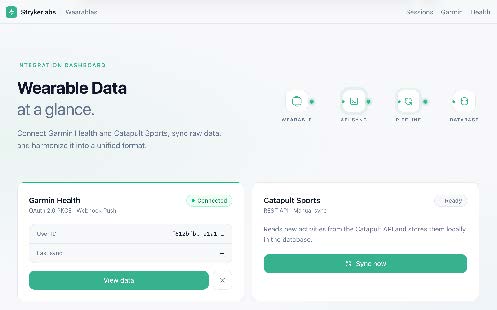
The goal of this master’s project was to design and implement a modular interface that:
- Supports a “Bring Your Own Device” strategy in research settings
- Enables API-based integration of heterogeneous wearable devices
- Harmonizes vendor-specific data into a unified internal data model
- Provides a user-friendly configuration and import/export workflow
- Ensures extensibility for future device integration
Methodology & Design
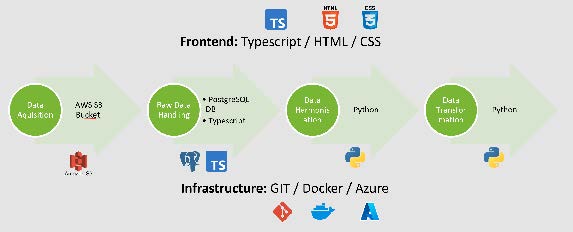
A modular system architecture was designed to separate API communication, data transformation, and output generation. vendor-specific authentication and data retrieval processes were implemented, followed by automated mapping into a unified internal data model. The data model was designed to be configurable, allowing flexible definition of output structures according to specific application requirements.
Strengths of the architecture:
- raw data pre-processing
- vendor specific parser identification
- configurable mappings (patients & productive
- layer)
- configurable harmonisation
- configurable transformation
Perspectives/Implications
The proposed interface enables simple, interoperable, and scalable integration of heterogeneous wearable data across diverse eHealth applications.
Results
The developed interface enables device-independent data acquisition. Data from heterogeneous vendors can be harmonized into a consistent internal representation, allowing crossdevice comparability. The system reduces manual preprocessing efforts and facilitates scalable integration of additional vendors.
References
[1] Loukas, V. et al. Deliverable 4.3 – LETHE Sensing Ecosystem. Horizon 2020 Project LETHE, 2022. https://www.lethe-project.eu