Background & Objective
Hearing loss is a common sensory impairment in older adults and is independently associated with accelerated cognitive decline and increased risk of dementia [1]. The Whisper Test is a widely used clinical screening tool but is performed manually, leading to variability and limited reproducibility [2]. This project develops a mobile application to standardize test execution and automate evaluation.
Methodology
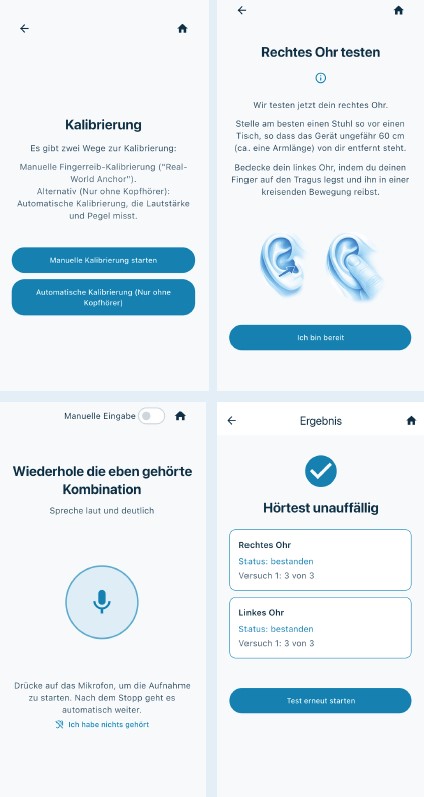
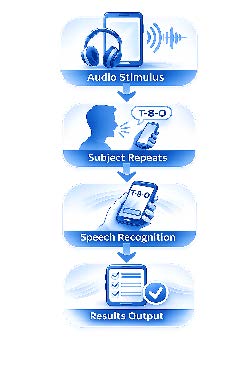
The conventional Whisper Test protocol was analyzed and translated into a standardized digital workflow. Based on this framework, a mobile cross-platform application was designed and implemented. The application includes two operational modes, allowing users to choose between headphone use and no headphone use.
Results & Implications
The application enables reproducible stimulus presentation and automated response evaluation, thereby increasing objectivity, standardization, and consistency compared to the traditional manual approach. Although the system remains sensitive to environmental noise and may produce inaccuracies if manual calibration is performed improperly, it nevertheless represents a significant improvement in procedural reliability. By supporting broader and more standardized implementation of the Whisper Test in both clinical and home-based settings, the solution facilitates more accessible and regular hearing screening.
References
[1] Lin FR, Albert M. Hearing loss and dementia – who is listening? Aging & Mental Health. 2014 Aug 18;18(6):671–3.1.
[2] Pirozzo S. Whispered voice test for screening for hearing impairment in adults and children: systematic review.
BMJ. 2003 Oct;327(7421):967–0